Floating Aerators
Floating aeration machines with variable-frequency drive — oxygenate 3–8 acres per unit with an efficient motor core.
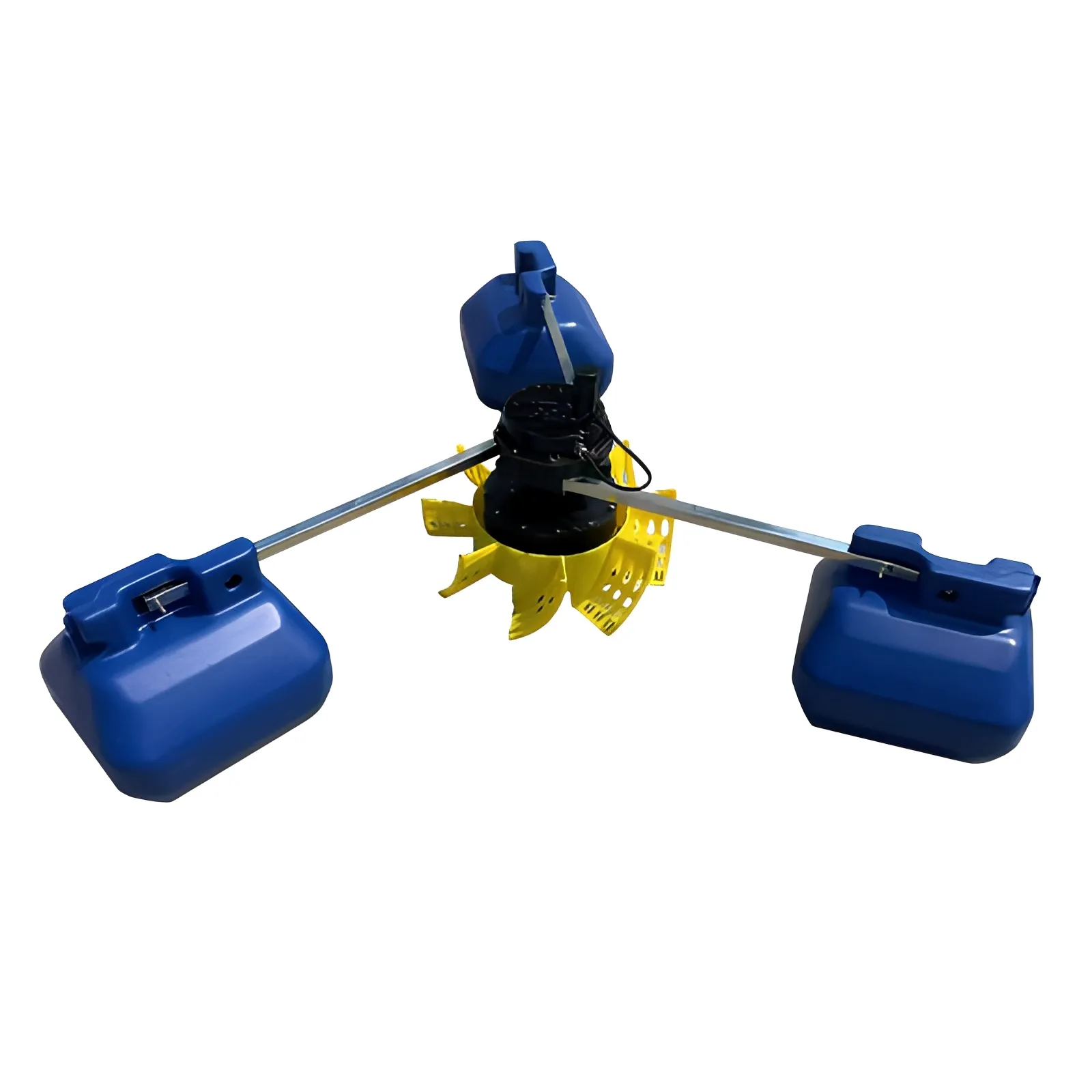
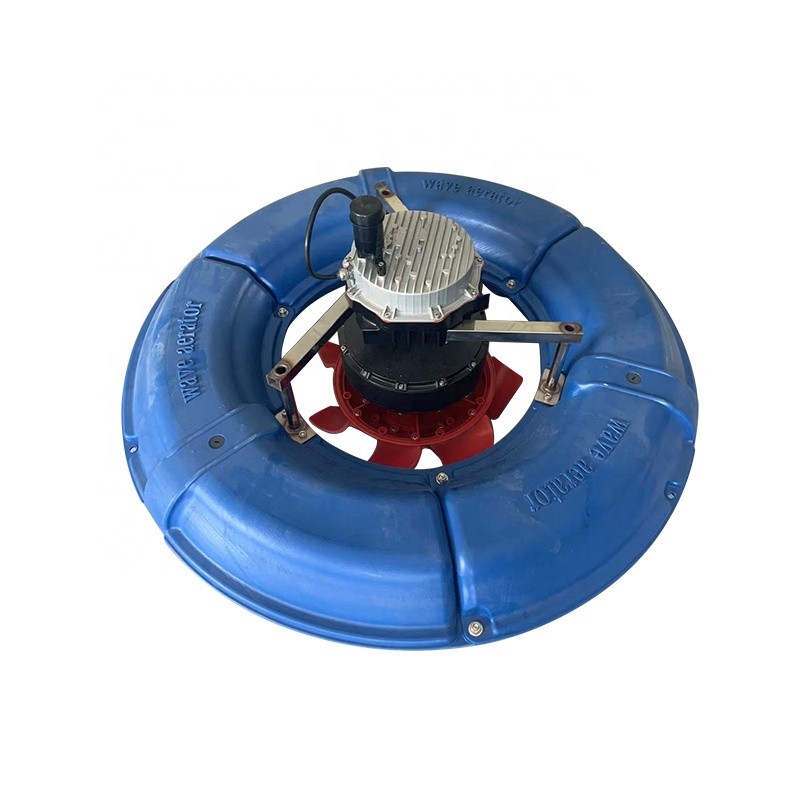
How floating aerators work
A floating aerator combines water lifting, stirring and oxygenation in one machine that sits on the pond surface. The impeller throws water into the air, where it breaks into droplets and absorbs oxygen, while the surrounding flow circulates the pond water and keeps the whole column moving. Because the machine floats, it works at any water depth and follows the water level automatically — the practical choice for ponds that cannot take a fixed blower house, and a common backup to bottom aeration.
A single unit typically covers 3–8 acres of pond, depending on model, stocking density and water depth. For deep ponds, pair a floating aerator with bottom microporous aeration: the surface unit mixes and cools, the bottom tubing oxygenates the sediment layer — a combination many farms adopt for maximum dissolved oxygen control.
Model range & performance (official data)
| Model | Type | Power (kW) | Voltage | Oxygenation (kg/h) | Pond load (mu) |
|---|---|---|---|---|---|
| BYL-1.5-1-S | Impeller | 1.5 | 380 V 3-phase | 3.5 | 4–8 |
| BYL-1.5-2-S | Impeller | 1.5 | 220 V 1-phase | 3.0 | 4–6 |
| BYL-2.2-S | Impeller | 2.2 | 380 V 3-phase | 4.0 | 6–10 |
| TSBYL-2.2-3.0 | Impeller | 2.2–3.0 | 380 V 3-phase | 4.5 | 8–12 |
| BBQ-2.0 | Aeration type | 2.2 | 380 V 3-phase | 4.2 | 6–10 |
VFD permanent-magnet technology saves energy
Our floating aerators use a permanent-magnet motor with a variable-frequency drive (VFD). Unlike fixed-speed paddle wheels that run flat-out or not at all, a VFD aerator adjusts speed to the oxygen demand of the pond: run at full speed in hot weather or after feeding, and drop to low speed at night or in cool seasons. Field practice shows the inverter control alone saves 20–30% of the electricity of a fixed-speed aerator, on top of the roughly 50% saving that fine-bubble systems already bring.
The permanent-magnet motor is smaller and lighter than an induction motor of the same power, runs cooler and quieter, and starts softly — no current surge that trips farm breakers. Choose 220 V single-phase for small ponds or 380 V three-phase for larger installations, and always connect the residual current device (RCD) recommended in the user manual.
Choosing the right model for your pond
Match the aerator to the pond surface area, depth and stocking density: as a guide, 3–5 acres for a standard model, up to 8 acres for the largest units. Round ponds with central circulation benefit from one aerator placed at the edge; long rectangular ponds need two units at opposite ends. In emergency oxygenation — power cuts, sudden oxygen drops after storms — a floating aerator restores surface dissolved oxygen in minutes, which is why many farms keep one even when their main system is bottom aeration.
Every unit comes with an installation and user manual covering wiring, safety and troubleshooting, plus the same 3-month replacement / 1-year repair warranty as our blowers.
Installation and seasonal care
Anchor the aerator so it cannot drift into the banks or entangle feed lines; leave enough slack in the power cable for normal movement and protect the plug against rain. In winter, when ponds are idle, lift the machine out of the water, drain it and store it in a dry shed to protect the motor and impeller.
For aeration layout advice — floating, bottom or a combination — send us your pond size, depth and species, and our engineers will propose the complete system with the correct model and power.
Floating aerators vs paddle wheels
A traditional paddle wheel throws water with fixed blades at fixed speed; it mixes the surface layer well but uses full power even at night when demand is low. A VFD floating aerator adjusts speed continuously: full speed at midday or after feeding when oxygen demand peaks, reduced speed at night, and minimal speed in cool weather. Across a season this speed control typically saves 20–30% of the electricity of a fixed-speed unit, and the permanent-magnet motor is quieter and lighter.
Both machines have their place. Farms often keep one paddle-type aerator per few acres purely as an emergency surface-oxygenation backup, while the VFD aerator handles routine duty. Tell us your power budget and we will recommend the mix.
Warranty, spares and support
Every floating aerator is test-run in our workshop before packing, and the user manual covers installation, 220 V and 380 V wiring, residual current device (RCD) requirements, daily checks, troubleshooting and seasonal storage. The warranty is 3-month replacement and 1-year free repair, with spares — impellers, shaft seals, motor controllers — stocked for fast dispatch.
For ponds larger than 8 acres or unusual shapes, we design multi-unit layouts and can supply the aerators together with blowers, microporous tubing and accessories in one shipment, so every part of your aeration system comes from one source with one service contact.
Documents you can download
Each VFD aerator ships with a user manual covering installation, wiring diagrams for 220 V and 380 V supply, RCD safety requirements, maintenance intervals and troubleshooting tables. The manual is also available as a PDF download on the product page, together with the factory inspection records for the drive and motor. Our engineers can review your pond plan and confirm power and unit counts before you order. For multi-unit farms we provide a wiring schematic and a starter checklist so your electrician can install everything in one visit, with the correct breakers, cable sizes and RCD ratings already marked.
Ask about Floating Aerators
Request specifications, prices and lead times — our engineers reply within 24 hours.