Applications
Aeration is not one-size-fits-all. Here is how we match blowers, microporous tubes and discs to the way you farm — with sizing guidance for each scenario.
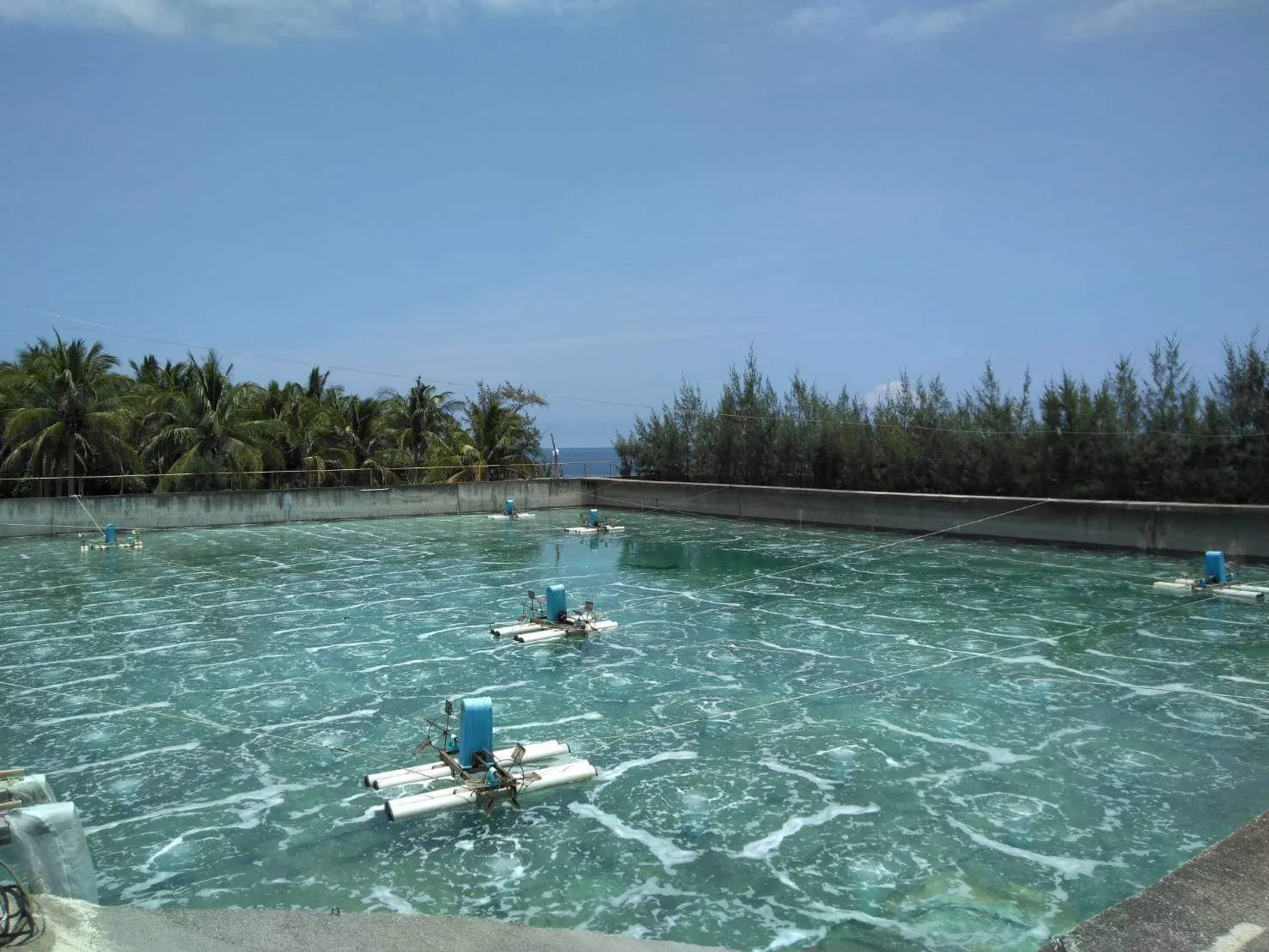
Aquaculture ponds
The problem: Surface aerators oxygenate the top layer only — the bottom, where waste settles, stays hypoxic and breeds disease.
Our solution: Microporous tubes or discs laid on the pond bottom release fine 0.3–2 mm bubbles that rise slowly, oxygenating the full water column — including the hypoxic bottom layer.
- Bubble diameter 0.3–2 mm (FW) / 0.5–3 mm (SW) — large gas-liquid contact surface
- Works to 5 m water depth at 0.05–0.10 MPa supply pressure
- Reported energy saving of about 50% vs paddle-wheel aeration
- Self-sealing pores prevent clogging when the blower is off
Recommended system: Roots blower + microporous tube/disc array, sized by pond area and depth
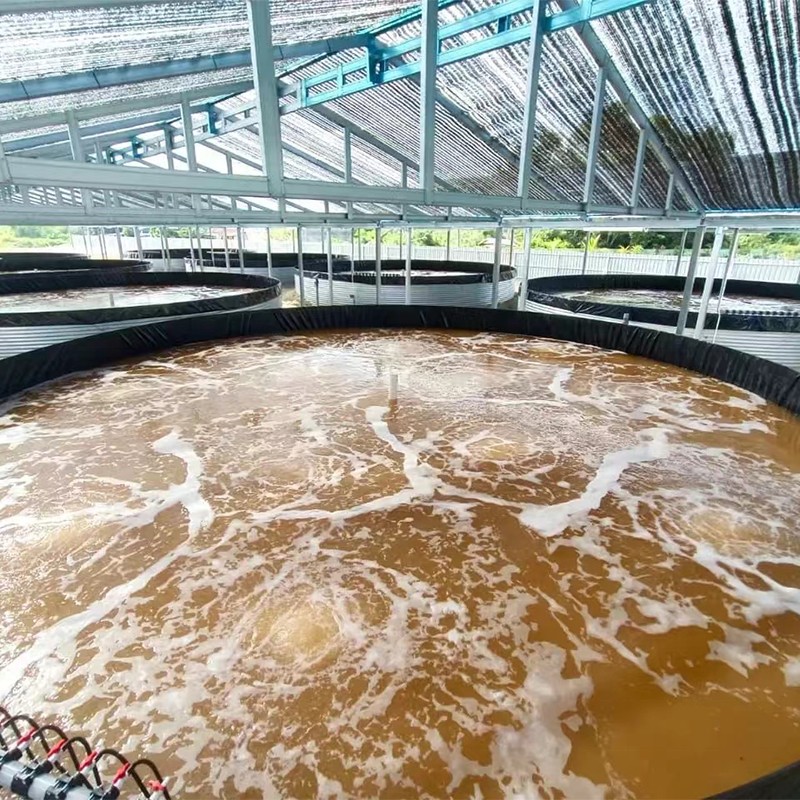
RAS & indoor farming
The problem: Recirculating systems concentrate fish waste and CO₂; oxygen demand is high and consistent, and downtime is expensive.
Our solution: Continuous fine-bubble aeration keeps dissolved oxygen stable across every tank, while airflow from the bottom lifts solids toward the drain for removal.
- Stable DO ≈ 4.5 mg/L with continuous operation
- Uniform aeration across circular and square tanks
- Low noise — no stress response in stocked fish
- Blowers can be placed on shore, outside the tank room
Recommended system: Intensive Roots blower + aeration disc arrays + galvanized canvas tanks
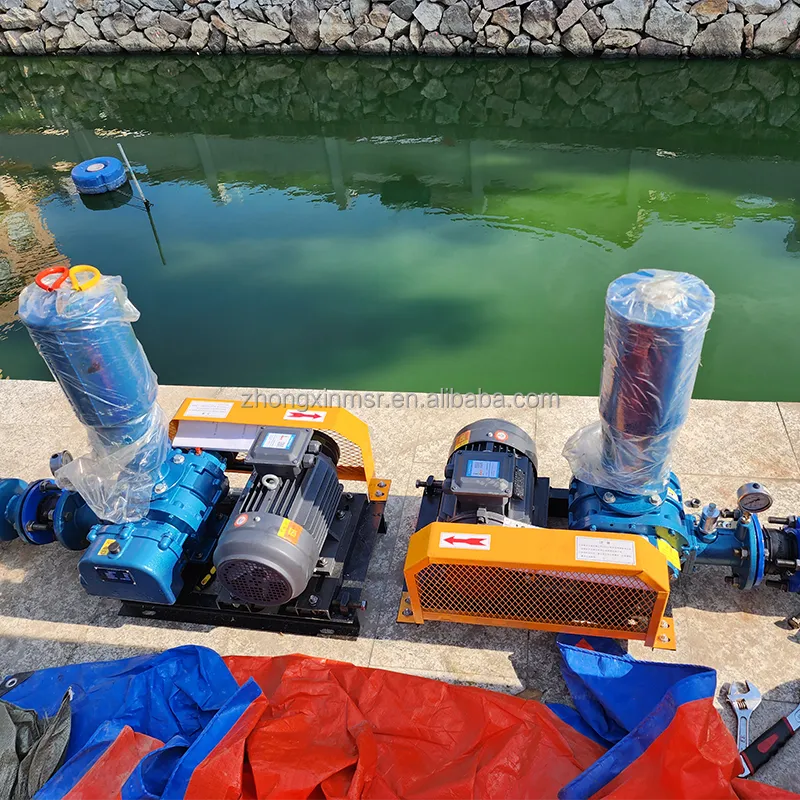
Wastewater treatment
The problem: Aeration basins need reliable, energy-efficient oxygen transfer for the bacteria that clean the water — with minimum maintenance.
Our solution: Microporous aeration discs deliver a dense cloud of fine bubbles that keeps activated sludge aerobic, transfers oxygen efficiently, and resists clogging.
- Suitable for municipal and industrial aeration basins
- High oxygen transfer efficiency from fine bubbles
- Low maintenance — pores self-seal when not in use
- Available in variable microporous aerator formats
Recommended system: Roots blower + aeration discs or variable microporous aerators
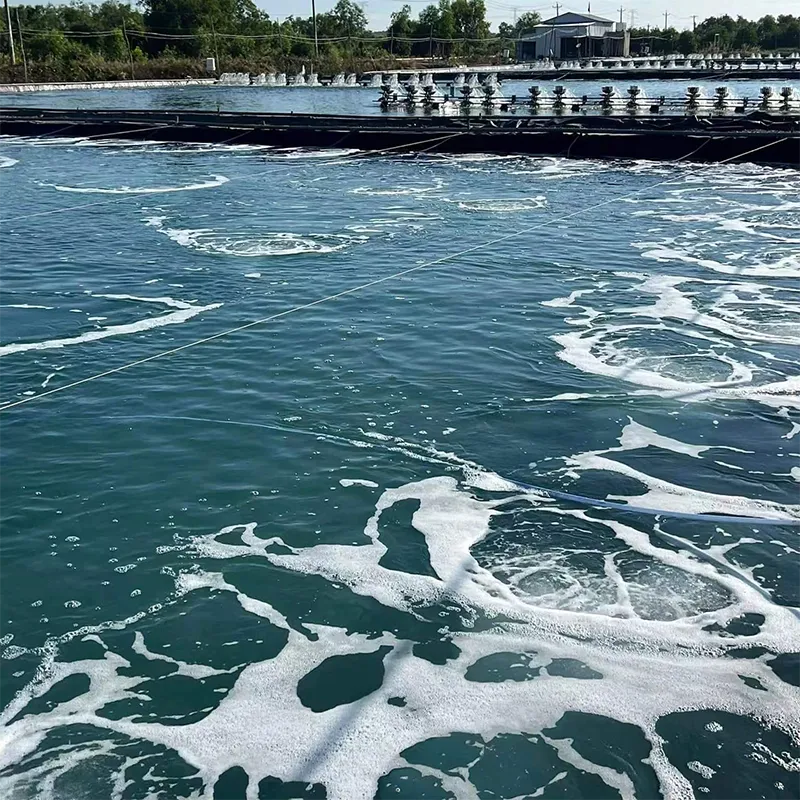
Live transport & high-density systems
The problem: Live seafood transport depends on constant oxygenation — mortality spikes the moment dissolved oxygen drops.
Our solution: Aeration hose can be cut to length and shaped to any tank, delivering fine bubbles with little air resistance — so a small blower keeps DO stable for hours.
- Hose cut to any length and bent to any shape
- Low energy input — a small blower serves the whole tank
- High oxygen transfer per unit of air
- Also supports high-density pond systems (≈80 kg fish/m³ reported)
Recommended system: Compact blower + aeration hose or tubes, sized to tank volume
Get a free system design
Tell us your pond size, species and water depth — our engineers will reply with a blower and aeration layout recommendation within 24 hours.